Pencil pauses3 min read
A familiar mug can supply a small drawing session without becoming a realistic still-life assignment. Use two views on the same page: one broad silhouette and one deliberately simplified outline. This original exercise gives the pencil a modest job, with a finished pair rather than an open-ended demand to draw well.
Read the guide ↗
Pencil pauses3 min read
Change the subject of a small sketch from things to the spaces between them. Arrange three suitable objects and draw one or two visible gaps, leaving the objects themselves mostly absent. This original paper exercise makes an ordinary tabletop into a collection of abstract shapes without requiring a realistic finished picture.
Read the guide ↗
Pencil pauses3 min read
A line can curl, lean, break or travel across a page without needing to become a polished picture. Divide a small sheet into four loose areas and invent a different kind of weather in each. The weather is fictional, so the session can remain a playful mark-making task rather than an observation exercise.
Read the guide ↗
Pencil pauses3 min read
Dots can suggest a garden without drawing a single realistic plant. On a small page, place a few clusters and leave paths of open paper between them. This original activity turns density and spacing into a simple design choice, with no need to identify plants, copy a botanical illustration or plan an actual garden.
Read the guide ↗
Pencil pauses3 min read
An invented transit map can give a wandering line a small story. Draw one route and three fictional stops, then let each stop have a different shape or purpose. Because the place does not exist, the activity needs neither accurate geography nor personal addresses, and it can end with one compact paper journey.
Read the guide ↗
Paper play3 min read
Three loose paper shapes can become more than one small picture without adding materials. Arrange them once as a scene, then rearrange the same pieces into something different. This original paper game keeps the interesting part in the movement between versions, so there is no need to glue the first arrangement down.
Read the guide ↗
Paper play3 min read
A repeated shape changes character when it turns. Make or choose one broad paper motif, then use it to explore four orientations on a small page. This original composition exercise needs no cutting precision or complex symmetry vocabulary; it asks only what happens when the same shape faces another direction.
Read the guide ↗
Paper play3 min read
A small paper town becomes easier to invent when the palette is limited. Use two available colors and leave one open street through the composition. This original activity is about deciding how shapes meet, overlap and leave space, rather than copying a real place or designing a workable building.
Read the guide ↗
Paper play3 min read
Most puzzles ask for the right solution. This original paper version asks what several arrangements can become. Use five broad clean pieces, set a small imaginary frame and make two different answers without changing the pieces. The interest lies in choosing a relationship, not completing a timed challenge or matching a hidden reference.
Read the guide ↗
Paper play3 min read
A narrow bookmark shape offers a compact design surface. Draw two versions on scrap paper and move the empty area from one part to another. This original exercise makes a useful-looking object without requiring cutting, laminating or buying supplies; the sketches alone can be the whole small session.
Read the guide ↗
Words & archives3 min read
A familiar object can become interesting when it receives a tiny exhibition label. Choose something ordinary and write a few descriptive lines, then add one clearly fictional detail. This original writing game gives everyday attention a small container without requiring a personal journal entry, a meaningful confession or a polished story.
Read the guide ↗
Words & archives3 min read
A short fictional scene can begin without finding the perfect idea. Choose one ordinary object, one invented place and one small change, then give each a sentence. This original three-part prompt creates a finished miniature without asking you to write about your own worries or build a complete plot.
Read the guide ↗
Words & archives3 min read
An imaginary postcard combines a small view with a few ordinary words. Invent a place, choose one detail to draw or describe and write a short note from someone visiting it. This original leisure activity needs no travel booking, personal address or actual message to another person.
Read the guide ↗
Words & archives3 min read
An archival poster can become a short visual observation instead of another page to read deeply. Choose one suitable example and look at its letter shapes, spacing and relation to the image. This original activity borrows a viewing subject from a primary collection while keeping your small response separate from the poster’s historical claims or advertising message.
Read the guide ↗
Words & archives3 min read
A short poem can be an occasion to play with pace and emphasis without performing for an audience. Choose an appropriate text you may read, then try two ordinary readings and notice one difference. This original activity does not require memorization, literary analysis or a polished voice recording.
Read the guide ↗
Noticing & sharing3 min read
A sound map can be a small drawing rather than a complete inventory of everything you hear. From an ordinary suitable place, use a few marks to represent sounds that seem near or far. This original visual activity has no required count, recording task or expectation that the surroundings become quiet.
Read the guide ↗
Noticing & sharing3 min read
A page can suggest sound without playing or recording anything. Invent a few written sound words for a fictional scene, then vary their spacing and shape. This original activity combines language and drawing, with an imaginary setting that can remain as quiet, busy or peculiar as you want.
Read the guide ↗
Noticing & sharing3 min read
One visible leaf can supply a small observation page without needing a botanical identification. Make an approximate outline, write a few visible details and leave one question open. This original activity keeps looking, describing and wondering distinct, so the notebook does not become a test of nature knowledge.
Read the guide ↗
Noticing & sharing3 min read
A single ordinary view can contain several different small pictures. From a comfortable position indoors, choose three imagined frames and sketch their broad shapes. This original composition activity does not require an impressive landscape, good weather or a photograph; the change comes from deciding what each little frame includes.
Read the guide ↗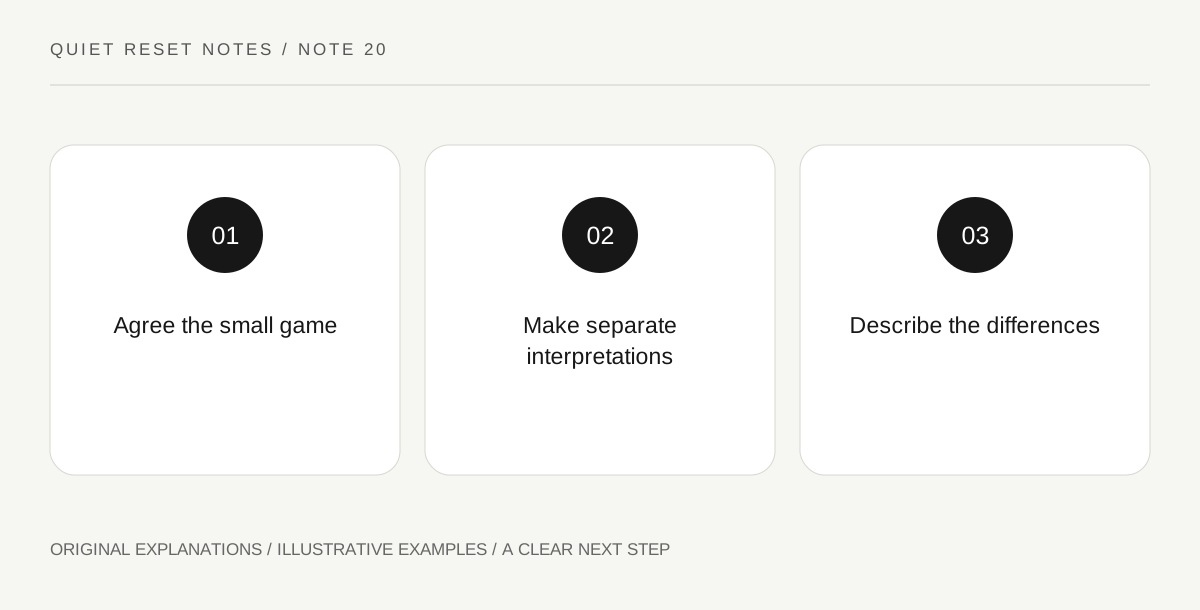
Noticing & sharing3 min read
A small shared drawing can be a game of different interpretations rather than a collaborative masterpiece. With a willing companion, begin from one abstract line and let each person make a separate small response. This original activity keeps agreement about the process while allowing the pictures themselves to diverge.
Read the guide ↗