Write a postcard from a place that exists only on your page
An imaginary postcard combines a small view with a few ordinary words. Invent a place, choose one detail to draw or describe and write a short note from someone visiting it. This original leisure activity needs no travel booking, personal address or actual message to another person.
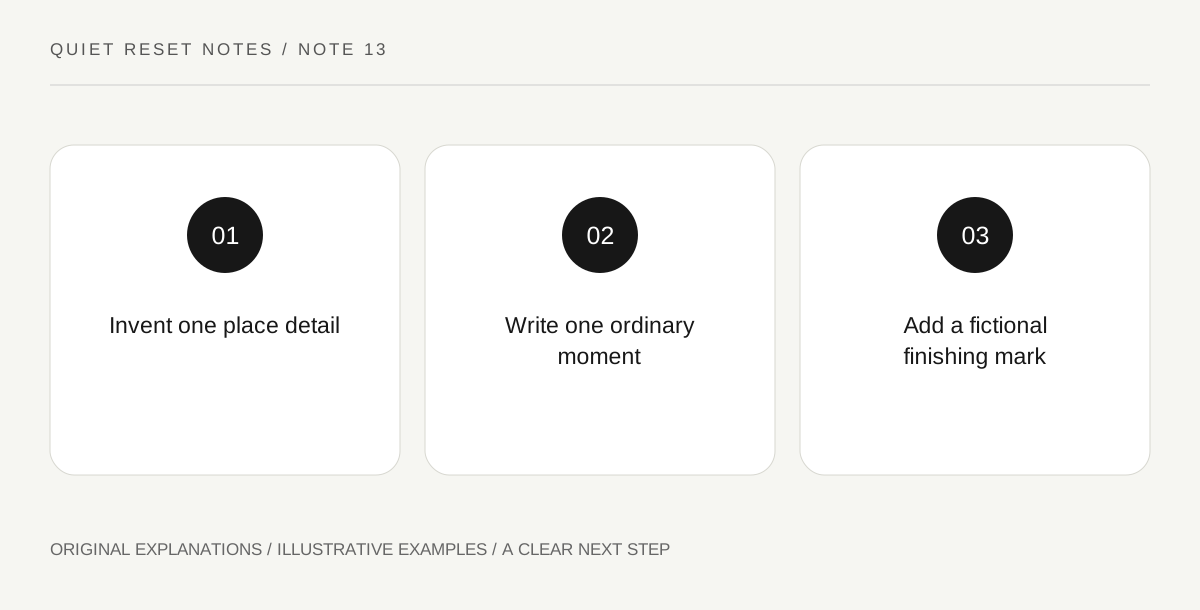
Original explanatory diagram. Read the full method and limitations below.
Give the place one defining feature
Choose a fictional location with one easy-to-picture detail, such as a square with umbrella-shaped trees or a harbor for paper boats. You do not need a map, climate or complete history. Divide a scrap into an image area and a note area if that format helps. The Library of Congress’s free-to-use collections can provide optional examples of historical visual formats; this invented postcard does not reproduce a collection image or claim to document a real destination.
Make the view deliberately selective
Draw the chosen detail with a few marks, or describe it in one sentence if drawing is not inviting. Leave the rest of the place outside the frame. A postcard is useful here because it can show one selected view without explaining everything around it. If using a historical image for inspiration, read its actual item record and rights information before reusing it. You can avoid that additional task entirely by keeping the view wholly your own invention.
Write a note about one ordinary moment
Let the fictional visitor mention a modest event: finding a blue bench, waiting for a paper ferry or eating an invented kind of cake. Keep the note short enough to sit beside the view. No dramatic travel narrative is needed. Use a made-up recipient or leave the address area blank. The activity is a private creative format, so it does not require contacting somebody, revealing a real location or turning the note into an obligation to maintain correspondence.
Add a small stamp-shaped mark
If you want a final detail, draw a simple stamp-like box with a symbol from the invented place. Make no imitation intended to function as real postage. Then give the postcard a title and decide whether to keep it loose, use it as a bookmark or set it aside. The view and ordinary moment can form a complete pair. Another destination can wait for another pause rather than creating a collection you must finish or display.
An illustrative small session
Imagine a postcard from Umbrella Square, showing three tree-like canopies and a visitor’s note about finding a bench that stays dry in imaginary rain. The recipient line is blank and the decorative stamp contains a tiny umbrella. This original fictional example is not an actual travel claim, historic document, postal item or message sent to another person.
Questions that come up
Must I send the postcard to finish the activity?
No. It can remain a private creative object. The format supplies an image-and-note structure without creating a communication task or requiring another person to respond.
May I use any old image without reading its record?
Do not assume that. Consult the actual item’s rights and context if you reuse an image. A wholly invented drawing or written view avoids needing an archival image at all.
References and scope
These sources support the factual background. Examples and exercises are original illustrative teaching material. References do not imply endorsement.
- Library of Congress — free-to-use collections — Primary historical-image collections and item-level context for optional observation exercises.