Make a tiny fictional scene from an object, a place and a change
A short fictional scene can begin without finding the perfect idea. Choose one ordinary object, one invented place and one small change, then give each a sentence. This original three-part prompt creates a finished miniature without asking you to write about your own worries or build a complete plot.
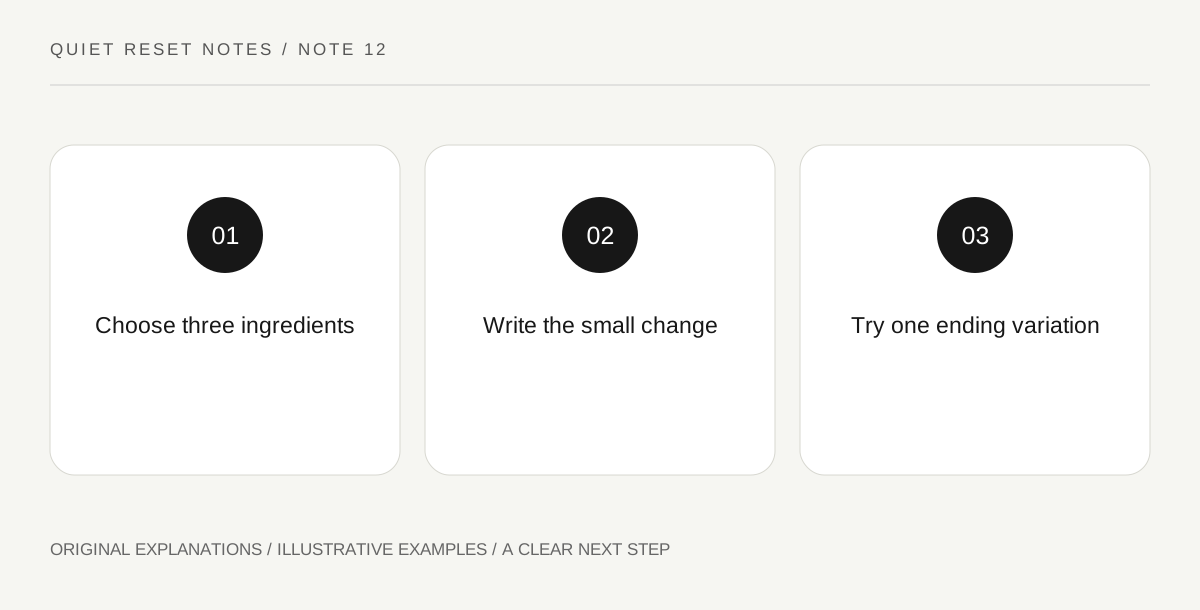
Original explanatory diagram. Read the full method and limitations below.
Choose three simple ingredients
Write an object such as a paper hat, an invented place such as a station for bicycles and a small change such as a light switching color. Keep the ingredients uncomplicated and replace any that feel uninviting. The prompt belongs to ordinary creative leisure, with the NHS reference providing broad enjoyment context rather than a tested writing treatment. No real person’s private experience is needed. Fiction lets you choose a small subject that does not demand an explanation of your own day.
Give each sentence one job
Let the first sentence place the object, the second introduce the change and the third show a modest response. You can alter that order if another sequence feels natural. Keep the response small: a passenger moves the hat, a door opens or somebody chooses a different bench. A tiny scene does not need a dramatic twist or a lesson. Giving the sentences different jobs helps the page move forward without requiring a long outline or a large cast of characters.
Try a different final response
Read the miniature and write one alternative last sentence beneath it. Change the action rather than polishing every adjective. Perhaps the hat stays where it is, or the passenger gives it a new use. Compare the two endings and choose either, both or neither. This is a small creative variation, not an assessment of which version reveals your personality. You can prefer an amusing sound or image without explaining why it represents a deeper personal feeling.
Give the scene a plain title
Use an object or place name from the miniature as its title. Stop after the title and optional alternative ending, even if a longer story could be imagined. The unwritten continuation is available for another day rather than becoming work you must complete. You can keep the scrap, read it to a willing companion or let it remain private. The point is a compact invented event with a clear stopping place, not a finished publication or a daily writing streak.
An illustrative small session
An invented example begins with a paper hat on the last bench of a bicycle station. A lamp turns green, and a passenger folds the hat into a tiny tray for lost buttons. An alternative ending leaves it waiting for an imaginary cyclist. These original fictional details illustrate the prompt and are not a quotation from a published story or a claimed result from a reader.
Questions that come up
Must the story have a moral or a surprise?
No. A small visible change can be enough. The prompt is designed around a manageable fictional event, not a requirement to produce wisdom or a clever twist.
What if I want to continue writing?
You may, but treat that as a choice rather than a debt created by the miniature. The original scene can remain complete even when the imagined world could support another page.
References and scope
These sources support the factual background. Examples and exercises are original illustrative teaching material. References do not imply endorsement.
- NHS Every Mind Matters — wellbeing tips — General context for enjoyable activities and time for oneself, not clinical validation of these original exercises.