Make three small compositions from one ordinary window view
A single ordinary view can contain several different small pictures. From a comfortable position indoors, choose three imagined frames and sketch their broad shapes. This original composition activity does not require an impressive landscape, good weather or a photograph; the change comes from deciding what each little frame includes.
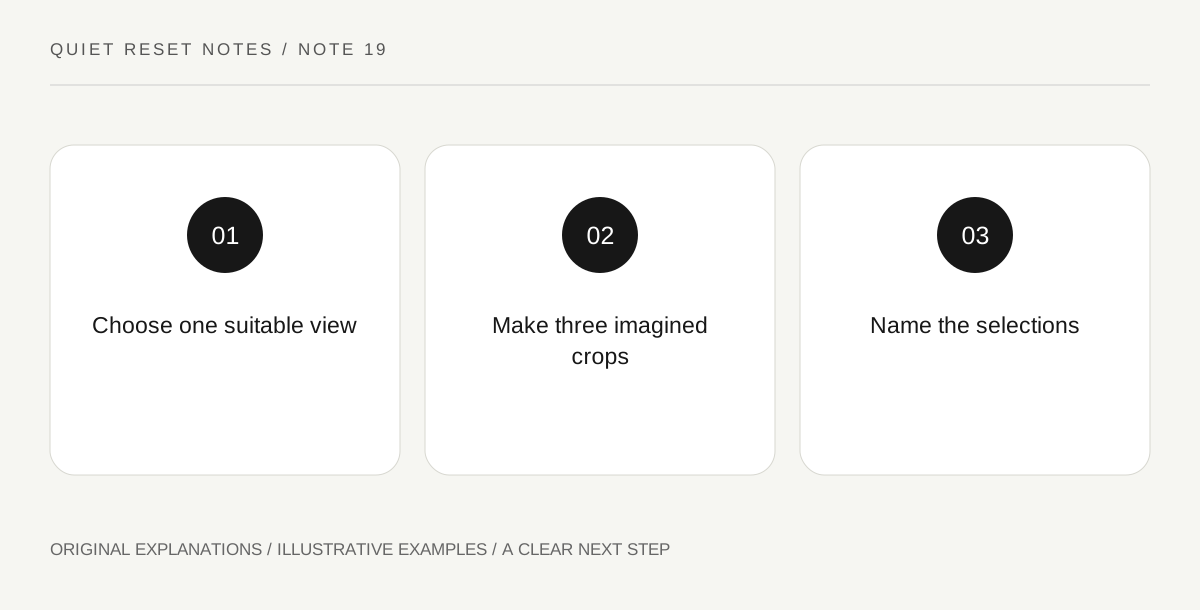
Original explanatory diagram. Read the full method and limitations below.
Choose a comfortable stationary view
Use a window or another safe ordinary viewpoint without leaning into a hazardous position or interrupting a responsibility. Look toward suitable scenery and avoid looking directly at the sun. Keep other people’s private interiors and identifying details out of any shared record. The Gallery’s shape and line resources supply general visual vocabulary, while this three-crop exercise is our own. The view can be mostly buildings, a wall and a tree; it need not resemble a travel photograph.
Draw three loose frames
On a small sheet, sketch three rectangles or other comfortable frames. In the first, choose a broad grouping; in the second, select one smaller relationship; in the third, let an edge divide the space differently. These are imagined crops, not instructions to move physically closer. You can remain in the same position throughout. Use approximate shapes and leave distant detail blank. The difference between the frames matters more than their realism or the accuracy of every visible line.
Give each frame a distinct balance
Notice where the largest open area sits in each sketch. One could have more sky-like space, another more wall or foliage, and another a narrow gap between forms. Keep any description tied to what is actually visible rather than inventing a story about people beyond the window. You can shade one area lightly to distinguish it, but do not fill every frame with detail. A few broad choices are enough to make the compositions feel different.
Name the three selections
Use simple titles describing the view choices, such as wide space, near corner and narrow gap. Compare which selection you enjoyed drawing without deciding that it is the objectively best picture. The page can end as three small studies with no photographic finish. If you want another session, choose a different ordinary viewpoint rather than continuing to correct this one. Framing provides a small creative choice inside a familiar setting without needing to turn the environment into an artistic destination.
An illustrative small session
In an illustrative session, a reader’s window view includes a wall, branches and an open area above. Their three sketches emphasize the broad grouping, the gap beside a branch and the upper open space. They title the frames by those choices and stop. The invented example makes no claim about a real location, photographic result or measured change in stress.
Questions that come up
Must the view be beautiful or natural?
No. An ordinary wall or group of buildings can provide different shape relationships. The creative choice is what you include in each frame, not whether the setting looks like a scenic destination.
Do I need to take photographs?
No. The three sketches can be the entire activity. If you choose to photograph separately, respect privacy and the setting rather than treating a creative prompt as permission to record other people.
References and scope
These sources support the factual background. Examples and exercises are original illustrative teaching material. References do not imply endorsement.
- National Gallery of Art — shape — Geometric and organic shapes and composition vocabulary.
- National Gallery of Art — line — Line as an element of visual art; supports vocabulary, not a therapeutic outcome.