Read a short poem privately in two ordinary voices
A short poem can be an occasion to play with pace and emphasis without performing for an audience. Choose an appropriate text you may read, then try two ordinary readings and notice one difference. This original activity does not require memorization, literary analysis or a polished voice recording.
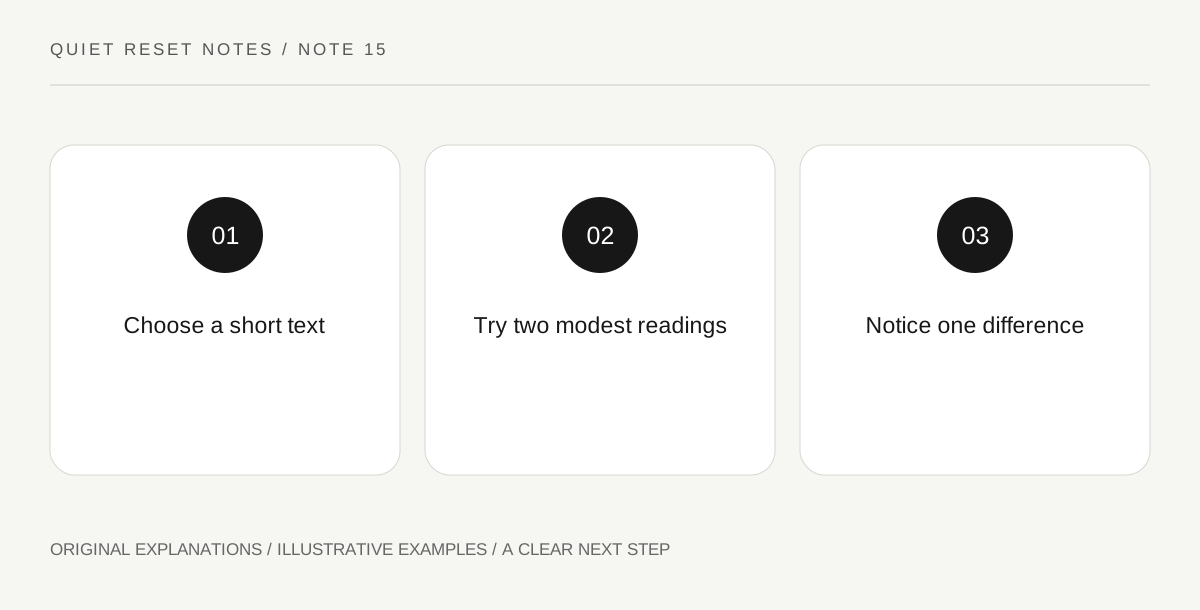
Original explanatory diagram. Read the full method and limitations below.
Choose a manageable text
Use a short poem you have legitimate access to, or browse the cited Library of Congress public-domain anthology for an appropriate selection. The collection record identifies its rights context; no poem is reproduced in this guide. Choose something whose language and subject feel welcome. There is no requirement to read a difficult work or complete a whole section. If an older text feels dated or uninviting, leave it and choose another rather than turning the pause into a syllabus.
Give the first reading an everyday pace
Read privately as though explaining the words to yourself. Let ordinary breathing and a comfortable voice guide the pace; no sustained-breath task is involved. You can read silently if speaking does not suit the setting. Mark one word or pause that catches your attention without analyzing every line. The first pass simply gives you a version to compare, not a performance that must be corrected until it meets an imagined professional standard.
Change one emphasis for the second reading
Try a different pause, a more conversational tone or emphasis on another word. Keep the change modest enough to notice. You do not need to impersonate an actor, exaggerate emotion or find the author’s single intended delivery. Compare what becomes clearer or simply sounds different to you. If the second reading is less appealing, that is still useful information about your preference. The activity does not require every repetition to be an improvement.
End with a small listening note
Write the poem’s title and one sentence about the difference between your readings, or keep the observation in memory. Do not quote or share a whole text without checking its applicable rights. No recording or public upload is required. The session can end after two readings, even if you did not understand every reference. You can return later for literary study if you want; for this pause, the small change in voice and emphasis is a complete creative activity.
An illustrative small session
Imagine a reader choosing a short appropriate public-domain poem and first reading it conversationally. On the second pass they move one pause and emphasize a different word, then note that the line sounds more like a question. This invented session includes no quoted poem and claims no required interpretation, vocal technique or measured relaxation result.
Questions that come up
Must I read aloud for the activity to work?
No. A silent reading with a changed imagined pause can be the whole activity. Choose what suits your setting and comfort without treating volume or vocal performance as a requirement.
Do I need to understand every historical reference?
No. You can notice a sound or phrase while leaving deeper study for another time. If the text is uninviting, choose a different poem rather than forcing the pause into difficult homework.
References and scope
These sources support the factual background. Examples and exercises are original illustrative teaching material. References do not imply endorsement.
- Library of Congress — English poetry anthology — Cataloged public-domain anthology for an optional private reading activity; no poem is reproduced here.